


How to Choose a Good Concealed Carry Holster

Form, Function & Everyday Confidence
Carrying a concealed firearm isn’t just about owning the right gun—it’s about carrying it safely, comfortably, and consistently. The foundation of good concealed carry is the holster. And not all holsters are created equal.
Whether you’re new to concealed carry or refining your setup, here are the essential factors to look for in a quality holster—and why many professionals (myself included) prefer Kydex for daily carry.
1. Trigger Guard Must Be Fully Covered
This is non-negotiable. A quality holster must completely cover the trigger and guard against anything inadvertently entering the trigger area (shirt tail, car seatbelt buckle, or even your own finger when reholstering). Exposed triggers create a serious negligent discharge risk.
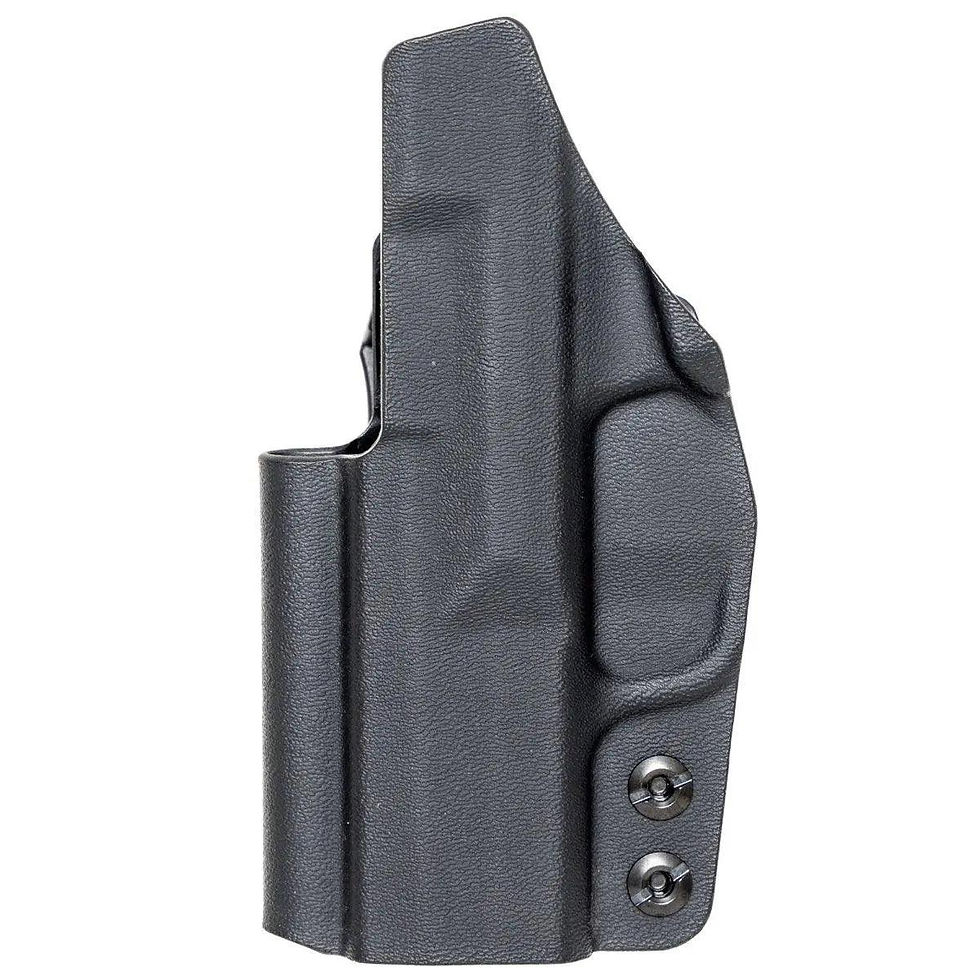
Kydex holsters excel here because they maintain a rigid, precise mold over the trigger area—no collapse, no stretching, no surprises.
2. Holster Must Stay Open for Safe Reholstering
You should be able to reholster your firearm with one hand, without fishing around or pointing the muzzle at yourself. A holster that collapses after the draw (like many soft nylon or hybrid holsters) forces you to use your other hand to open it back up—and that’s a recipe for danger under stress.
Kydex remains open after the draw, allowing a safe and deliberate reholster every time. Look for holsters with reinforced openings or all-rigid construction.
3. Secure Attachment to the Belt or Body
Your holster is only as effective as its mounting system. Whether it’s inside-the-waistband (IWB), outside-the-waistband (OWB), appendix carry, or even shoulder rigs, your holster must stay in place during the draw and throughout your day.
Look for:
Strong belt clips or loops (steel or high-strength polymer)
Adjustable retention and cant for proper angle and draw speed
Compatibility with your carry belt width
A holster that shifts, sags, or detaches when you draw puts you and others at risk.
Why I Recommend Kydex Holsters
Kydex has become the industry standard for a reason:
Rigid & durable
Molded precisely to your firearm
Retention can be custom-tuned
Weatherproof and easy to clean
Slim, concealable profile
Brands like Tier 1 Concealed, Tulster, and Bravo Concealment offer excellent Kydex options for common pistols like the Glock 19, SIG P365, or Springfield Hellcat.
⚠️ Bonus Considerations
Always Verify Firearm is Unloaded First: Before inserting your gun into any new holster—triple-check that it is unloaded.
Remove the magazine.
Rack the slide several times and visually and physically confirm the chamber is empty.
Once confirmed, you can then rack the slide (to test fit with the slide in battery) and gently insert it into the holster to ensure:
The trigger remains fully covered
The holster does not inadvertently press on the trigger
This same unloaded protocol must be repeated anytime you adjust holster retention. Safety first, always.
Retention: Does the gun “click” into place? Can it be shaken loose upside down? Passive or active retention can be a personal choice, but some level of secure fit is a must.
Comfort: Sharp edges? Hot spots? Try wearing it around the house first. If you won’t wear it all day, you won’t carry consistently.
Draw Angle: Appendix vs. strong side vs. crossdraw—all depend on your body type, activity, and environment. Make sure your holster allows a clean, consistent draw stroke.
Holster Fit for Accessories: Carry a red dot or light? Make sure the holster is cut and molded accordingly.
Final Thoughts
Don’t just choose a holster based on looks or price—choose one that makes safe, confident daily carry a reality. Your holster should be part of your system, not just a place to park your pistol.
If you're local to Mesa County or Western Colorado, check out our training courses. Feel free to bring your setup—we’ll help you dial it in.
www.plctrainingco.com or sign up for a private lesson today.


Comments